The market is not short of sellers.It is short of sellers with integrity.
Buying physical gold in Africa means understanding more than the material. These are the risks EasyGold has identified in Kenya, and the operating rules we use to reduce your exposure.
Why the majority do not succeed
Two reasons. Both avoidable.
01
Naivety
The buyer arrives assuming that seeing gold means owning gold. It does not. The gap between appearance and confirmed purity is where many losses occur.
This is not a character flaw. It is a preparation failure, and it is correctable before any trip is made.
02
A flawed market
Low regulatory visibility, informal distribution channels and no central counterparty make exploitation straightforward.
This is not a broken system waiting to be fixed. It is the structure of the market. Buyers who understand that approach transactions differently.
Can you tell the difference?
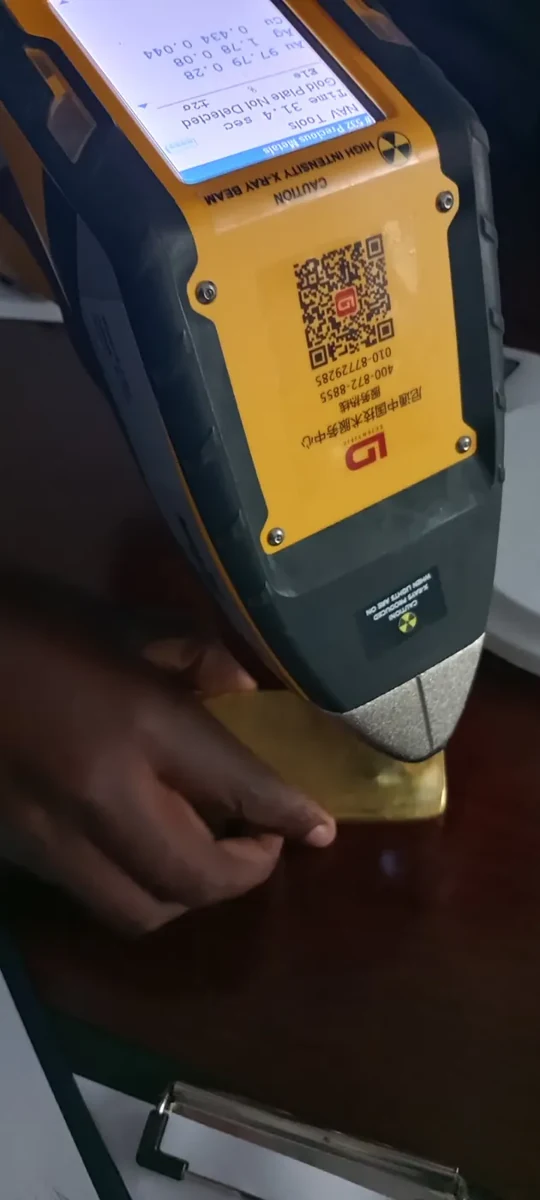
These videos were filmed in Kenya by EasyGold. One shows real gold. One does not. Consider what it would mean to make that call with your own money at stake.
Video AOriginal comparison footageVideo BOriginal comparison footage
Appearance is not verification.
What you are walking into.
Four named risks. Each one calls for a specific operating response.
01
Fake sellers
Professionalised operations with offices, documentation and websites can remain indistinguishable from legitimate exporters until money moves.
Export documentation, assay obligations and tax structures can be difficult for an outsider to navigate. That opacity is commercially useful to bad actors.
Our responseDocument verification
03
Advance-fee requests
A fee appears before gold is seen. Another follows. Each is framed as procedural. In this scam, the fees are the transaction; the gold is the prop that keeps the buyer engaged.
Our responseNo funds to sellers or agentsControl of collateral
04
The testing problem
Independent testing is refused, delayed or compromised. A seller-introduced tester is not independent. Any obstacle to verification is itself the answer.
Our responseBona fide testers
Six rules. One discipline.
Every rule that follows exists because we have seen what happens when it is broken. These are conclusions drawn from direct experience in this market.
Click the top card to reveal Rule 1.
00 / 06 revealed
Tap the top card to reveal the next rule.
01 Absolute
Do not wire money into Africa.
No funds to sellers, agents or advocates under any circumstances. Every legitimate transaction structure we offer is built around this single rule. It is the foundation upon which everything else rests.
02 Structural
Single custody of the collateral.
The buyer holds it. Alone. In a location of their choosing. Not jointly. Not in a seller-controlled arrangement.
The one exception is Tri-Party CIF, where a law firm and bank hold institutional custody; neither able to act unilaterally.
We work with a small number of verified testers in Kenya whose integrity we can vouch for directly. A tester introduced by the seller is not independent. Any obstacle to testing is itself the answer you need.
04 Documentation
Independent document verification.
Export documents can be fabricated. Any documentation provided by a seller requires independent verification before money or collateral moves. We provide that verification as a standard part of our service.
05 Intelligence
Pre-purchase intelligence.
The type of seller to work with. The type to avoid. The mistakes that cost buyers the most. Some of what we know is not published here. That conversation is private, but it is available before any commitment is made.
06 Legal
Verify signatory authority.
Anyone signing a contract must have documented, verifiable authority to do so. We have witnessed a sale contested because the signatories did not appear on official company registration. A recoverable situation before signing. Not after.